Nothing induces insomnia quite like stress, so I can well imagine a bit of Nessun Dorma in Italy over these coming weeks.
Fears that the "Euro Contagion" were spreading like Ebola to Italy has caused the country's cost of borrowing to reach it's highest level in almost a decade, prompting a large sale of bank shares and a sizeable plummet in the stock market. The problem is being exacerbated by Silvio Berlusconi and Italy's Finance Minister Giulio Tremonti who allegedly, and perhaps somewhat operatically, emphatically stated “If I fall, Italy falls as well…If Italy, a country too big to be rescued, falls, then the euro falls too!”
As a result of the latest fears, officials from the European Central Bank know report that the current eurozone bail out funds are insufficient and suggest doubling the available money to €1.5 trillion.
The creeping insolvency is also stalking its way across the continent to Spain who thus far have remained astonishly free from talk of rescue packages. It will once again fall on Germany's shoulders, who have actually enjoyed a serious period of good growth, to wade in and pull her floundering neighbours out of the shallow waters. And so again the debate continues - full fiscal unity, or break up the Monetary Union altogether, and risk making the EU a laughing stock?
Even in the Financial Times commentators are dismissing threats that contagion would only spiral out of control should Greece leave the euro or default as utter balloney designed to promote whichever purported rescue plan is currently on the table. Yet most EU leaders are now beginning to embrace some degree of default as the only option for Greece.
Monday, 11 July 2011

Friday, 1 July 2011
Why simply employing Brits will not work
 And so the Government, well, Iain Duncan Smith, is going to announce that they will urge UK firms to employ British. Is this going to miraculously solve the problem of mass migration to the UK? Well if you consider the fact that since May this year EU migrants are now entitled to claim benefits after just 12 months of employment in the UK, probably not. Either Brits will be on the dole, or Eastern Europeans.
Recent figures show that between 1997 and 2010, half of the rise in UK employment was jobs taken by foreign nationals. The unemployment rate of 16-24 year olds went from 79,000 to 895,000 in just three months leading up to this April. Clearly we have a critical situation.
Now we all now under labour droves of foreign nationals were welcomed into the UK. Cynics would argue it suits the party to have firstly, less employment available, and secondly, foreign nationals they can pledge to look after and win a few more votes. Whatever the case however it's relatively irreversible. You cannot start sending people packing without seriously disrupting their lives, and who can blame them for wanting to ake opportunities and start afresh if they think they are able to do so in the UK? You would, I am sure, if you were in their shoes.
So the Government has put a cap on skilled workers from outside the EU i n an effort to reduce migration from about 200,000 a year to tens of thousands, or 21,700 to be precise. But most citizens of EU countries face no restrictions on working in the UK an restrictions are due to be lifted on Romanians and Bulgarians too over coming yeats. British firms, under EU law, are not allowed to discriminate against non UK employees, so IDS is simply talking about the paltry 21,000 people who the government can control. Compare that to the fact that the population has soared 470,000 a year under the migration boom, pushing UK population through the 62 million barrier or 3 million more than judt nine years ago, and you realise that 21,000 is a drop in the ocean.
But that's not the only problem A recent EU ruling has seen Turkish workers returning home after having worked in the Netherlands are entitled to receive incapacity benefits from the Dutch authorities for the rest of their lives. The landmark ruling by the European Court of Justice could pave the way for further legal strictures dictating that even when foreign workers return home, the British taxpayer would still have to fund them. In that light, it would probably be better if they remained here and at least contributed a small amount to the country's economy.
I don't like to simply bemoan Brussels. I also do my best to challenge them at every turn.
I recently wrote to the Commission asking:
From 1st May, hundreds of thousands of migrants will be able to apply for full UK benefits after only three months of residency.
Welfare benefits such as jobseekers allowance, council tax and housing benefit will be available when previously migrants had to demonstrate a year of UK employment.
Since 2004, despite predictions only 13,000 workers would come, more than a million officially registered with 650,000 still here. The unofficial number could be far higher.
The change in rules also means more migrants will be able to claim welfare benefits for children still in their home country. Currently 32,000 children in Eastern Europe are paid maintenance from Britain.
The UK system is generous and in terms of currency value, far higher than domestic welfare payments in most EU countries.
A growing sense of resentment in many member states such as Germany and France reflects a public that is increasingly disenfranchised.
What will the Commission do to prevent EU migrants from moving to other parts of the Union to claim welfare?
What sort of restrictions will be drawn up to prevent widespread benefits tourism?
How will the Commission prevent mass migration of citizens from one part of the EU to another which could have economic impact on both the domestic and the recipient member states?
They kindly responded, stating:
EN
E-004473/2011
Answer given by Mr Andor
on behalf of the Commission
(17.6.2011)
Commission reports[1] on the transitional measures applying to workers from EU-8, which expired on 30 April 2011, and those still in force for workers from Bulgaria and Romania, show that the reason why most people move from a new Member State to an EU-15 Member State is to work there. These migrant workers have helped to alleviate labour shortages in sectors and occupations where demand cannot be met by workers from within the country. Intra-EU labour mobility has also triggered substantial economic growth in both the receiving countries and the Union as a whole. There is no evidence that it has led to a rise in ‘benefit tourism’.
The EU rules on social security coordination[2] provide that the Member States are to treat EU citizens who are not nationals on a par with their own nationals as regards access to social security benefits.
EU legislation on the free movement of EU citizens[3] aims both to promote mobility and to protect the legitimate interests of the Member States by ensuring that public funds primarily benefit those who contribute to them. It does this by making the right to reside for more than three months in another Member State conditional on being in remunerated (self-)employment or having sufficient resources to avoid becoming a burden on the social assistance system of the host Member State. The latter is required to grant social assistance benefits to EU citizens in need who are not their nationals but meet the conditions laid down by EU law (and who therefore have a right to reside there) as it would to its own nationals in the same situation.
EU law therefore requires the Member States to show a degree of, but not unlimited, financial solidarity towards EU citizens who are not their own nationals. To protect the legitimate interests of the host Member State, it also allows the latter to take action to prevent EU citizens residing within its territory and who are not nationals from subsequently becoming a burden on the public finances.
[1] See ‘Report on the Functioning of the Transitional Arrangements set out in the 2003 Accession Treaty (period 1 May 2004–30 April 2006)’ (COM(2006) 48 final of 8 February 2006), which covers the first two years (2004-06) of the transitional measures for EU-8 workers, and ‘The impact of free movement of workers in the context of EU enlargement: Report on the first phase (1 January 2007 – 31 December 2008) of the Transitional Arrangements set out in the 2005 Accession Treaty and as requested according to the Transitional Arrangement set out in the 2003 Accession Treaty’ (COM(2008) 765 final of 18 November 2008), which covers the impact of free movement of workers in the context of enlargement during the first two years (2007-2008) of the transitional measures for workers from Bulgaria and Romania and a further review of the transitional measures for EU-8 workers.
[2] Regulation (EC) No 883/2004 of Parliament and of the Council of 29 April 2004 on the coordination of social security systems, OJ L 166, 30.4.2004.
[3] Directive 2004/38/EC of Parliament and of the Council of 29 April 2004 on the right of citizens of the Union and their family members to move and reside freely within the territory of the Member States amending Regulation (EEC) No 1612/68 and repealing Directives 64/221/EEC, 68/360/EEC, 72/194/EEC, 73/148/EEC, 75/34/EEC, 75/35/EEC, 90/364/EEC, 90/365/EEC and 93/96/EEC, OJ L 158, 30.4.2004.
Make of that what you will, but to me it sound like evasive waffle that is intent on not giving up. We must, must, must, leave the EU.
Friday, 3 June 2011
Cucumbers at Dawn

It’s all getting a bit nasty in the European Parliament these days. In fact, MEPs are getting so hot under the collar there will soon have to be weapons scanners on the entrance doors to the hemisphere with burly Belgian cops sweeping metal detectors up and down the trouser legs of infuriated MEPs.
Ok perhaps not, but Spanish MEP Francisco Sosa Wagner’s strong words about Cucumbergate were accompanied by a threatening wave of his mean green cucumber cudgel right in the middle of the chamber!
The EU has been caught in the crossfire between Spain and Germany over accusations that the recent deadly outbreak of E-coli all began with Spanish cucmbers. As a result thousands of farmers in Spain had to destroy millions of pounds worth of crop. The EU, as compensation, has proposed donating £134million in aid, yet the Spanish are threatening legal action unless Germany reimburses their loss 100 per cent. This is one cucumber sandwich that the British will not be having with their tea.
Meanwhile Europe are also getting tough on taxation. EU chiefs are demanding direct tax powers which could cost families up to £200 every year. That’s despite the cost of bailing out our neighbours costing the UK over £12.5 billion, far more than has been saved by savage government cuts.
Cuts which, incidentally, the European Commission approve. The fact that the European Commission has come out and demanded Westminster should stick with their “Plan A” for budget cuts and tax increases suggests that we probably are doing the wrong thing. What with protests in Madrid, Lisbon and Athens over EU and IMF enforced austerity measures, as well as three failed Eurozone economies and many more ailing governments in the single currency, the Commission seem increasingly out of touch with their people and decreasingly less likely to give a hoot anyway.
In fact over the next six months the European Commission are unrolling the “European Semester” where they will demand member state governments submit national budgets and reform programmes for EU approval. Jean Claude Trichet, the President of the European Central Bank, has described the new European Semester as the beginning of centralised fiscal policy.
We will watch and wait to see whether Osborne is happy to dance to the Brussels beat.
The one thing that  is desperately missing from this dialogue is the fact that actually, Eurozone countries should be able to leave the common currency and return to independent fiscal governance. Currently the ECB in Germany controls interest rates across the Eurozone, to the detriment of weaker economies and in part responsible for the collapses in Ireland, Portugal and Greece. I put this forward to Barroso in the last President’s Question Time.
Notice how he fails to answer the question and instead talks about how the Euro was not responsible for the world recession (well duh? But really, it was a massive contributing factor to the so-called euro contagion) and that he is sure Greece wants to stay in the Euro. Frankly, they don’t really have much choice given how endebted they are now to the EU and IMF. No wonder Brussels is doing their utmost to make sure the next IMF President is a European, and, surprise surprise, from France.
I also challenged Parliament over a little and at first seemingly unobtrusive amendment to a directive on HGV charges that plans to add an EU carbon toll. It is basically the first indirect tax to be levied by the Commission. Although the UK does not partake in the Eurovignette scheme, the government has been discussing joining in 2015, yet before that the Commission reserves the right to make their little “experimental” carbon charge obligatory. We all know that such costs are never fronted by big business and always land in the consumer’s purse, but what is worse is the fact that taxation powers should be discussed and passed by unanimous vote at Council level with all 27 leaders of the member states agreeing to the proposals.
This matter however has been slipped through Parliament as it “only relates to transport” which is an EU competence under the provision of the Lisbon Treaty. A sneaky backdoor way to introduce an indirect tax, because frankly, the Commission know full well not all member states would agree to such a policy.
Sneaky sneaky Europe.
Monday, 28 March 2011
Financial Crisis

I know, I know
It must seem every time an argument is put forward about anything to do with politics it all boils down to money. But this is surely a reasonable expectation, given that the job of most governments is to collect and then spend the money of the people they purportedly represent in a manner they see most universally suitable.
Do not think just because you personally do not pay a direct tax to Europe that it’s not your money being spent. It is. And a whopping estimated £48million a day goes to Brussels from the UK.
Yet in Europe, the state of their own finances is atrocious. While they chastise Greece and Ireland for running up enormous deficits and have in the case of the former turned the country into little more than an economic protectorate, their own fiscal record is far from unimpeachable.
Not only has the Commission failed to have its annual accounts signed off for the past 16 years (and let’s remember their former Chief Accountant turned whistle blower was so appalled by what she had witnessed she signed up as a UKIP MEP) but when there’s allegation of serious wrong doing, everything is brushed under the carpet. Meanwhile they are standing with their begging bowl insisting that non Eurozone member states contribute to a bail out fund to rescue their pet project currency that countries such as the UK were wise enough to never sign up to.
More recently a sting by The Sunday Times revealed three MEPs willing to take money from planted bogus lobbyists in return for introducing amendments to European Regulations. Out came OLAF from retirement (the European Commissions own Office of Fraud Busters) yet were then barred from the offices of the three accused MEPs by the Eropean Parliament in an utterly laughable twist to the plot, leaving everyone scratching their heads as to who has the legal entitlement to investigate bribery of this kind. Should the honour be bestowed on national authorities, or can the EU wade in and conduct their own investigation (whose credibility, I hasten to add, would probably be called into question anyway).
Yet Europe is keen to set up a financial services watchdog that will operate on a pan European basis and tell every financial institution in the 27 member states how to conduct their dealings. Whilst from the outside in the wake of a recession it may seem eminently sensible, let us not forget that this is the self same Union that insists on awarding itself a year on year budget increase despite openly acknowledging that purse strings need to be tightened. To quell the upset in The City, which effectively manages around three quarters of European and international financial transaction, former UK Financial Services Authority head honcho Verena Ross has been granted the title of Executive Director of the European Securities and Markets Authority, as if that is going to make the big banks less jittery about suddenly having a rule book thrown at them.
On top of these complaitns, Brussels just can't seem to stop spending their own money, so it begs the question how they will go about telling banks and member states how to spend theirs. £58 million is being thrown at a House of History Museum which is designed to show a fluffy and beautiful history of harmony and similarity across our beautiful 27 nation bloc. For this reason, the clock has only been turned back only as far as 1946 due to deep divisions in the interpretations of World War II. It has also been revealed that more than £80million has been paid by the Parliament to fnd spin doctors and the hugely popular EuroParlTV, which of  the half a billion citizens it is designed to serve, attracts fewer than 850 per day.
And so that brings me to my final grumble. Ireland are needing yet more bail out cash and as predicted so does Portugal. The European Central Bank renewed its bond buying activites by purchasing €432millon government bonds, mainly from Portugal. Despite the huge spend, markets seem to have barely registered the bold move, meaning a full scale bail out is becoming increasingly inevitable. Germany, already the good Samaritan for Greece and Ireland, are likely to insist the IMF is approached, meaning, yes, you guessed it, the UK will be part funding the rescue of Lisbon. Not that we wont contribute to the European Bail Out fund, negotiations about which were plunged into despair as Lisbon fell off the bottom of the debt scale. However it has emerged that despite all of his tough talk, Cameron seems to have agreed for Britain to pay a whopping £7bn into the fund, on top of the £3bn we have already given to Ireland. It has also been suggested Greece may need to shake their tin towards the EU or IMF again in order to reach the targets laid down by the Commission, as will Ireland. And of course, as we’ve said all along, if Portugal falls, it’s only a matter of time before they drag Spain down too. Already Spanish regional banks have had to announce plans to be recpaitalised to the Spanish Central Bank. Three have already requested funding from the Spanish government’s own bail out scheme.
And then of course you have the straw that will break the camel's back as Italy shouldn’t hold her breath either. Another economy biting the dust could well plunge the whole Eurozone into a quagmire of inflation, deep division and signal the end to the common currency.
Just like centuries before, The Fall of Rome could be a massive turning point in European history.
Thursday, 17 March 2011
Why we should love the Commonwealth

Monday March 14th was Commonwealth Day. On the same day the Guardian newspaper began a month long “Europe Season” while the EU Referendum Campaign celebrated its official start.
It got me wondering who are our global allies? Who do we look to in times of trouble, who can we relate to and who do we feel we have an obligation to support?
For years we’ve talked about a “special relationship” with America, but a series of perceived snubs, such as the Queen not being invited to the 65th Anniversary of 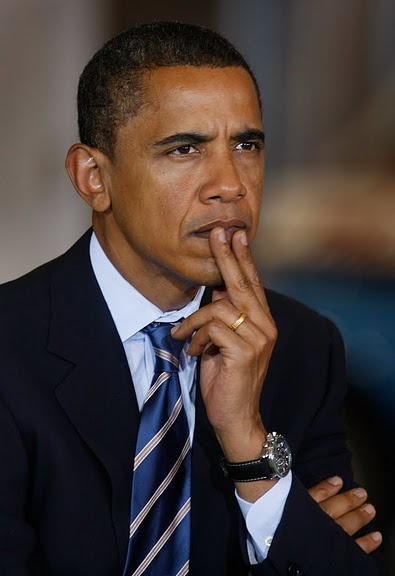 D-Day hosted by Sarkozy and Obama have largely been regarded as proof of the changing nature of our transatlantic kinship. In fact, this has been outlined in countless blogs and articles, so entrenched are we British in seaking approval from America. Here is a particularly good account.
Should we look to Europe? We are part of a Union powerful enough to make supra-national legislation, yet have not signed up to the Euro nor Schengen Acquis. We are by and large regarded as the most reluctant member state.
Are our natural allies the Commonwealth countries that share democratic values and with whom we are most likely to compete in this year’s rugby and cricket world cups?
I firmly believe in maintaining trade links with Europe and ensuring peace. But the EU trades freely with 60 non member countries and is unlikely to refute a trade deal with the UK should we revoke our membership.
However I believe it is the Commonwealth in whom we should invest more energy. The 54 member nations cover all four corners of the globe and boast a spread of ethnicities, languages and diverse cultures. Yet we share a common tongue and interconnected histories. The Commonwealth is not a political union but an intergovernmental organisation based upon culture, sport, literary heritage and shared legal practices. Members agree to human rights and democracy but are otherwise mutually independent. Sixteen members recognise the Queen as their Head of State, thirty three are Republics and five have monarchs of their own. Diplomatic missions between Commonwealth countries are High Commissions rather than embassies, reflecting the view that they do not consider one another “foreign”.
The Commonwealth could be regarded as the mother of modern Unions, and contributed to the creation of what is now the EU. When France was refused membership in the 1950s she instead signed the Treaty of Rome with the founding nations of the then Common Market. An argument for European integration is the geographical proximity of its members. Europe has a tumultuous history underscoring the importance of guaranteeing continental peace. Yet by working across the Commonwealth we do something more important. We spread a relationship further than a continent. Should Europe ever enter into war with another country in the Arab Maghreb Union, could we end up with two continents at war? I support the notion that Europe must work together to maintain peace. But creating a federal Union leaves member states little flexibility and is perhaps less desirable for future global harmony than perceived.
Our relationship with former colonies is mutually beneficial and respectful, despite the British Empire being borne out of bloodshed and exploitation. We maintain links and forge partnerships with countries including Australia, Brunei, India, Jamaica, Kenya, New Zealand, Nigeria, Pakistan, South Africa and Singapore.
In these times of turmoil with the threat of a summer of uprisings, it is perhaps more important than ever to think bigger than Europe.
Tuesday, 22 February 2011
We are all born equal...Just some are born more equal than others.
 Sex discrimination. It seems to have had a bit of a resurgence in recent months. There was the Sian Massey comments which landed Andy Gray and Richard Keys with the sack from Sky (as well as a plethora of other rather less than erudite off camera statements made towards female co-presenters).
There is also an undercurrent of backlash against the increasingly sexualised images of females, especially in pop videos. Perhaps what we are seeing is the natural elasticity of public opinion and prudency through the ages. At any rate the Georgian era was a famously free period sexually in British history and was succeeded by the strict and prudish Victorian era. Perhaps the lengths of social freedoms are stretched to the max, causing an inevitable retraction when it is deemed things have gone too far.
Today's attitude towards sex and gender is an interesting one. It has gone too far, but across the spectrum. One thing that drives me mad is anti-discrimination legislation that serves only to put constraints on society or adversely favour on set of people over another. Positive discrimination can be, in my opinion, no better than negative discrimination.
But there are also times when an effort to level off the differences between the sexes, narrow the advantages enjoyed by either sex or create laws to completely remove any form of gender partiality actually becomes pure folly. You may remember back in March 2009 the EU supposedly banned the use of a number of supposedly discriminating words. In a bid to achieve full blown gender neutrality, EU speak outlawed words such as Mr and Mrs, Frau, Senorita, Monsieur or Madam. They banned MEPs from saying sportsmen and statesmen, instead pressing for the use of the words athletes and polticians.
Man-made became taboo (replaced by artificial or synthetic) as did firemen, air hostesses, headmasters, policemen and so forth.
Most recently whacky EU gender discrimination law has now stated insurance companies cannot change rates based upon the sex of the person either. So whereas women once enjoyed cheaper car insurance or smaller life insurance pay outs, everything will now have to be evened out. But insurance premiums are based upon probability, and surely it is down to calculations based on collated data that young men DO have more accidents, and women DO tend to live longer. To expect Mrs Adams, young mother and sensible driver dropping her kids off at school, to pay the same as Shane from the corner of the street with his lowered sump and new alloys is surely madness.
Discrimination is a topic that the EU just does not get. In one instance they are doing their utmost to erase it, yet they are also the greatest perpetrators of discriminatory acts. In one breath the term "Islamic Terrorism" has been banned, but the persecution of Christians across the middle east and North Africa has not been officially recognised, only that certain minorities have been victimised, no mention of the religion, please.
Christianity has also become the invisible religion in school diaries commissioned by the EU. The new books, which mark key dates for all other religions, including Sikhism, Islam, Buddhism, Hinudism, Chinese religions and Judaism do not even mention Easter and Christmas. Why?
As I said earlier in the article. Discrimination is discrimination, whether "positive" or otherwise.
Tuesday, 8 February 2011
Moovers and Shakers

Potty thinking, but whose idea was it anyway?
Perhaps little did she expect the ensuing debate that would burst forth over magnets put inside cows' stomachs.
Of course, to raise concerns over the growing popularity of what is basically a floating naked flame that could fall anywhere within a reasonable radius of the point of departure, you do not expect then for the Commission to pose the solution of implanting magnets in the stomachs of ruminants. But that is typical of the European Commission. You ask them what the answer to 2 + 2 is and they will tell you it is the same as 1+6 x 18-22 / 4 - 6 / 5. They are paid huge salaries of course, to no doubt "think outside the box"
Whilst I am not a supporter of blanket bans, especially not made by the Commission or anyone else in Brussels, Chinese Lanterns do pose a threat. But it is not only to livestock. Organisers at Glastonbury festival send out patrols to make sure the airborne incendiary devices are not floating over the swathes of canvas that accommodate the thousands of festival goers who buy hundreds of pounds worth of tickets to see their favourite bands, not involuntary pyrotechnical displays.
Similarly can you imagine the consequence of one of these lanterns homing in on an oil refinery, or petrol station? Or tumbling out of the sky onto an unsuspecting jamboree?
Cow magnets does not answer the question.
But that is where the argument ends. Although the proposition is of course ridiculous in the light of the Chinese Lantern issue (and here I will point out that I have not read Ms Girling's written question to the Commission but one must suppose it underlines the particular grievances of UK cattle farmers) it does turn out that Cow Magnets exist and have been used successfully to prevent overzealous ruminants from sufffering internal injuries from the plethora of metallic objects they ingest over the course of a lifetime of indiscriminate munching. And to take the argument any further would see legislation havig to be drawn up to prohibit the use of a myriad metal objects that sneak their way into the countryside.
Subscribe to:
Posts (Atom)


 Posts
Posts


